Our Technology
Propanc’s leading products, PRP and PRP-DCM, are novel, patented suppository formulations based on proteolytic proenzymes, which are inactive precursors of enzymes.
PRP
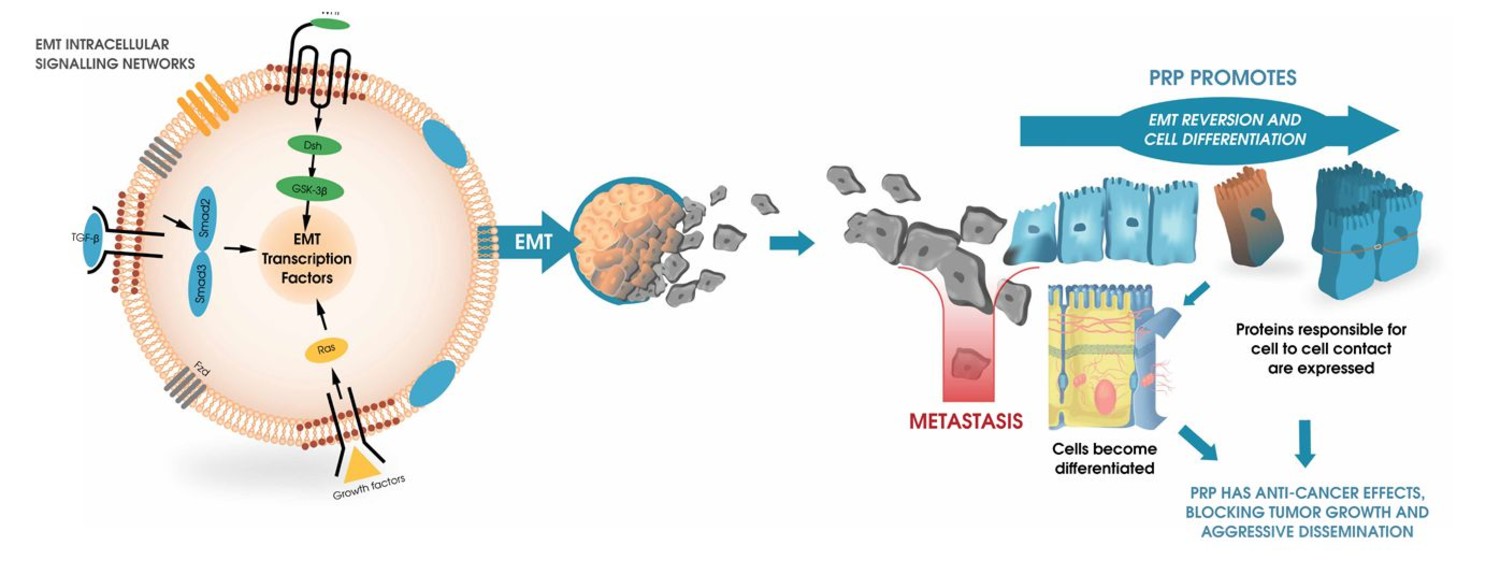
Our lead product, PRP, is a novel, patented once daily suppository formulation of proteolytic proenzymes. In limited human testing as outlined earlier, supplemented by laboratory research at the Universities of Bath and Granada on the mechanism of action of the proenzyme mixture, evidence has been obtained which suggests PRP may be effective against a range of solid tumors.
In addition to possibly extending survival, the limited human testing showed no observable severe, or even serious adverse reactions and can be easily self-administered.
Most cancer treatments currently on the market suffer from limitations of excessive toxicity or the development of resistance, limiting the extent to which they can be used chronically to control cancer over the long term. Whilst the clinical findings with PRP are early and subject to confirmation in future clinical trials, these data gathered to date, together with the observation that no evidence has been observed of the development of resistance by the cancer to PRP, suggest that PRP may be suitable for long term, chronic therapy.
PRP-DCM
Recent work undertaken by Propanc has focused on maximizing the potential of PRP as a drug suitable for long term maintenance by:
- Enhancing the effects of the proenzyme formulation by selecting additional ingredients at non-toxic dose levels which can augment the anti-cancer activity;
- Building on Propanc’s knowledge of the mechanism of action of proteolytic proenzymes in treating cancer to create additional patent opportunities to further protect Propanc’s competitive position in the field.
Scientific research has focused on developing a novel combination of anti-cancer agents working in combination with proteolytic proenzymes which enhance PRP’s anti-cancer effects. The enhanced proteolytic proenzymes-based formulations combine PRP with at least one of two types of identified compounds considered on the basis PRP’s mechanism of action to synergistically enhance the anti-cancer effects of PRP.
POP1
In order to maximize its proprietary knowledge on the use of proteolytic proenzymes in the treatment of cancer, Propanc is presently undertaking research to identify the mechanism at the molecular level by which Propanc’s proenzyme formulation is acting to cause cancer cell death. A research program has been established with Propanc’s collaborators at the University of Granada to investigate the changes in genetic and protein expression which occur in cancer cells as a consequence to being exposed to Propanc’s proenzyme formulation. The objective of this work is to understand at the molecular level the targets of Propanc’s proenzyme formulation, thereby providing the opportunity for the identification of new, patentable drugs which can be further developed by Propanc, such as synthetic recombinant proteins designed to improve the quality, safety and performance of proteolytic proenzymes used in the proposed formulations.
PRP Injection
An additional opportunity for PRP is in the treatment of solid tumor masses by the direct injection of PRP into those tumor masses. In order to achieve this, Propanc is developing an injectable form of PRP which would be suitale for direct injection into tumor masses, the intention being to cause shrinkage of individual problematic tumor masses.